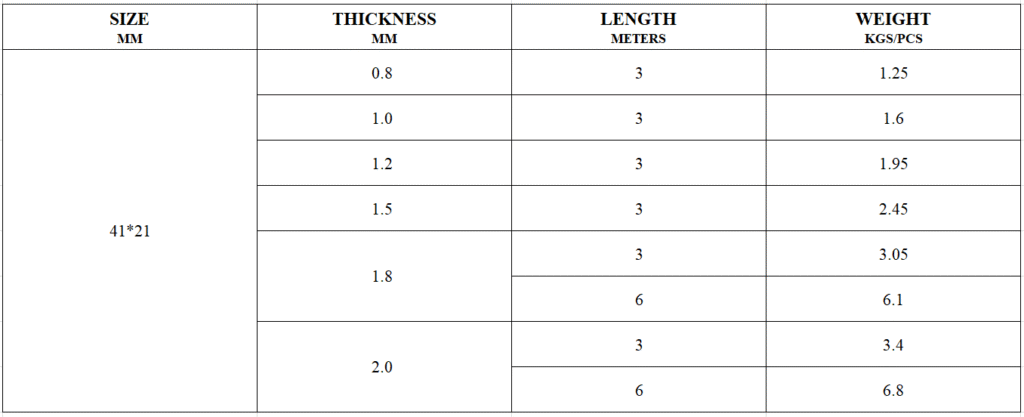
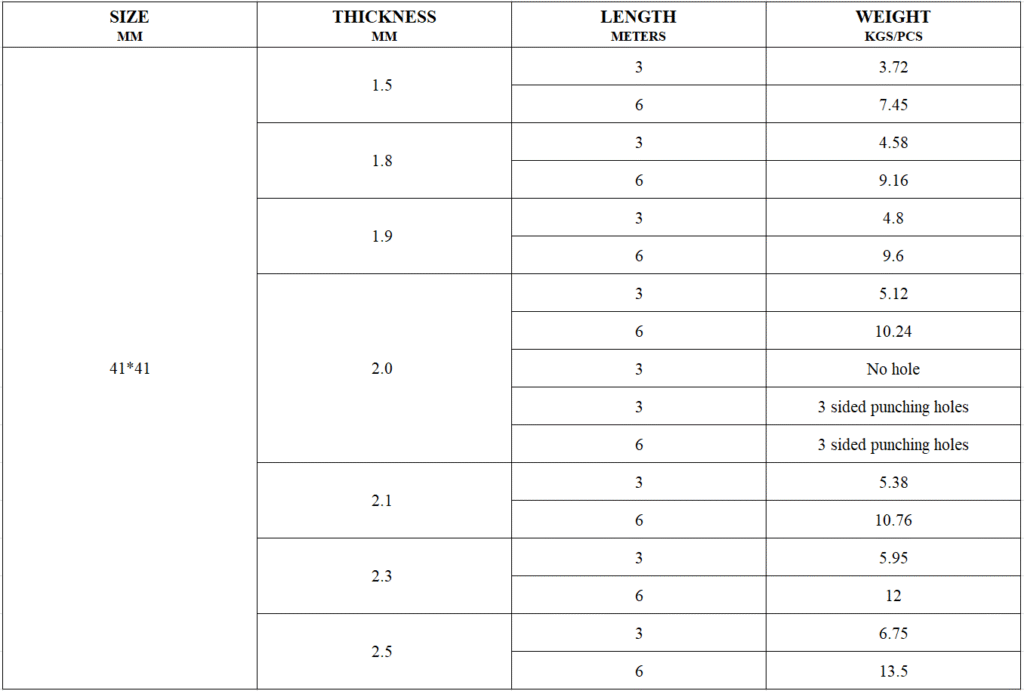
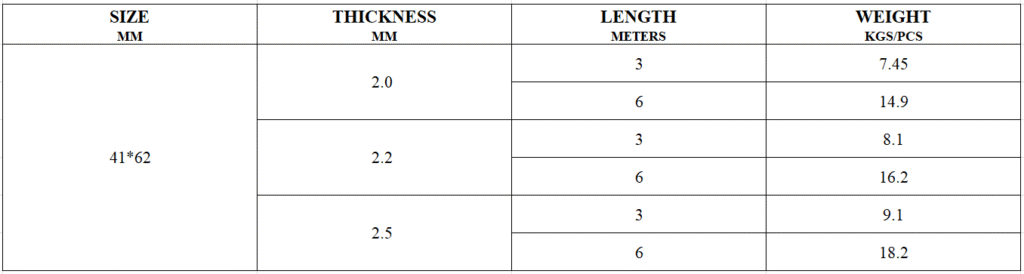
Electrogalvanized Slotted Strut Channel
The electrogalvanized slotted strut channel is a robust structural framework component widely used in construction, electrical installations, and industrial applications. Made from high-strength steel, it undergoes an electrogalvanizing process that enhances durability and corrosion resistance. This process involves applying a zinc coating through electrolysis, protecting the channel from rust and extending its lifespan in harsh environments. The material’s strength ensures stability under heavy loads, making it ideal for supporting pipes, conduits, HVAC systems, and mechanical equipment.
Key Features and Material Strength
Corrosion Resistance: The electrogalvanized coating provides superior protection against moisture, chemicals, and outdoor elements, reducing maintenance needs.
High Load Capacity: The channel’s design allows it to withstand significant weight, ensuring reliability in dynamic settings.
Lightweight yet Durable: Despite its strength, the channel remains easy to handle, simplifying installation and reducing labor costs.
Product Uses
The slotted strut channel is versatile, serving multiple purposes:
Electrical Installations: Used to secure wiring, conduits, and junction boxes in commercial and industrial buildings.
Mechanical Supports: Ideal for mounting machinery, ventilation systems, and plumbing fixtures.
Construction Frameworks: Acts as a backbone for modular structures, offering flexibility in design adjustments.
Industrial Applications: Deployed in manufacturing plants for equipment support and safety barriers.
Advantages
Easy Installation: The slotted design enables tool-free adjustments, allowing quick modifications without disassembly.
Cost-Effective: Combines durability with low maintenance, offering long-term savings.
Adaptability: Compatible with various accessories, such as brackets and connectors, enhancing functionality.
In summary, the electrogalvanized slotted strut channel is a reliable solution for diverse structural needs, blending strength, corrosion resistance, and versatility to meet modern engineering demands.